Occlusal Adjustment Washington DC & Alexandria VA
Occlusal Adjustment Washington DC & Alexandria VA
Occlusion refers to the way the upper and lower teeth come together when you bite. Ideally, the teeth should meet in a balanced manner without certain areas making contact too early or absorbing excessive force. When the teeth don’t align or come together properly, the condition is known as malocclusion.
Over time, an uneven bite can place added pressure on the teeth, supporting bone, jaw muscles, and temporomandibular joints, potentially contributing to tooth wear, discomfort, or other oral health concerns. An occlusal adjustment involves the careful reshaping of selected biting surfaces to improve the way the teeth meet and distribute pressure more evenly. The procedure may be performed as part of a prosthodontic reconstruction or, in certain cases, to help manage symptoms associated with temporomandibular joint disorders.
If left untreated, malocclusion can result in a range of oral health issues, including the following:
- Bruxism
- TMJ (temporomandibular joint) issues
- Damaged dental restorations
- Gum or bone recession
- Damaged muscles or nerves
- Cracked or chipped teeth
- Tooth/teeth loss
- Jawbone or tooth pain
- Sensitivity to hot or cold temperatures

Contact Precision Today
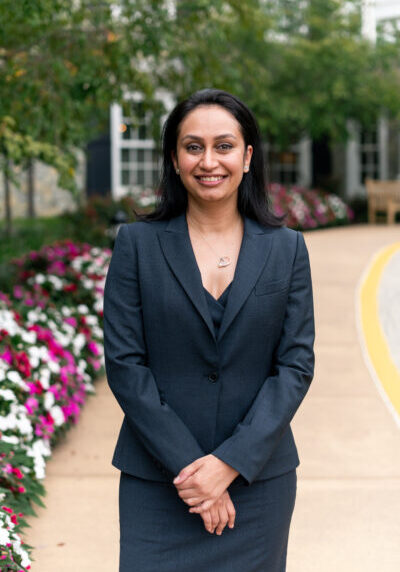
Dr. Daru
In 2005, Dr. Daru embarked on her educational odyssey, crossing continents to pursue her passion for dentistry. She obtained her Master of Science in Oral Biology and a certificate in Periodontics from the prestigious New York University and the University of Maryland, Baltimore, in 2010. During her academic years, she delved into intensive research, particularly focusing on innovative bone regeneration techniques, showcasing her dedication to advancing the field.
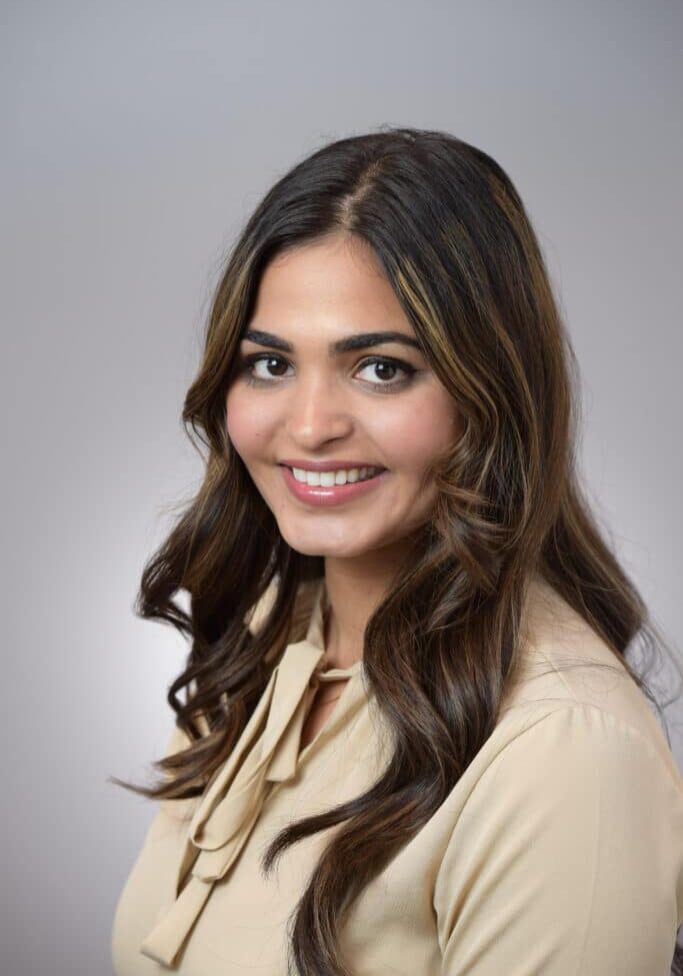
Dr. Gupta
Driven by a dedication to excellence, Dr. Gupta embarked on a transformative periodontal residency at the University of Detroit Mercy. Here, she earned her Master of Science and a certificate in Periodontics while simultaneously serving as an adjunct faculty for the School of Dentistry for three years. Her commitment to advancing dental knowledge took her to an international stage, where she presented groundbreaking research on clinical treatment for gum recession and root coverage at a prestigious conference in London.

Dr. Lakkis
Dr. Dima Lakkis earned her DDS with honors in 2006 and completed her Periodontics training and Master of Science at Case Western Reserve. She is Board Certified and a Diplomate of the American Board of Periodontology. Dr. Lakkis provides a full range of periodontal and implant treatments, with advanced training in cosmetic procedures. She is an active member of several dental organizations and has published in the Journal of Periodontology on the link between periodontal and systemic health.

Dr. Zalewsky
Following his military service, Dr. Zalewsky pursued advanced training at Temple University Kornberg School of Dentistry. There, he earned a Certificate in Periodontics and Oral Implantology, along with a Master of Science in Oral Biology. This comprehensive training equipped him to handle intricate periodontal conditions and complex oral implant procedures with precision and skill.
Occlusal Adjustment Candidates
To determine if you are a good candidate for occlusal adjustment, your periodontist will check to see if any of the following symptoms are present:
- Prematurity: Opposing teeth make contact before the jaw is shut completely
- Interference: Desired contact between your teeth is altered or inhibited
- Disharmony: Opposing teeth do not properly align
- Trauma: Trauma can cause opposing teeth to be off axis, which can cause damage to the tissue when making contact
If any of these issues are present, there can be serious side effects, including migraines or severe headaches, bruxism, neckaches, joint or muscle spasms in your neck, jaw, or face, as well as negative effects on the aesthetics of your smile, which can impact your self-confidence. If it is determined that these symptoms are present and the result of issues related to your bite, your periodontist may recommend an occlusal adjustment.
Occlusal Adjustment Expectations
There are several different methods for performing an occlusal adjustment. Which treatment option is right for you will depend on the source of your malocclusion. To determine which treatment method is right for you, your periodontist will make an impression of your bite to determine the source of your issue. Most of the time, malocclusion can be corrected by removing microscopic layers from your teeth, which will allow your teeth to meet at the same time. As these layers are removed, your periodontist will continue testing your bite until they are satisfied that your occlusion has been corrected. This is a simple and relatively pain-free procedure that does not typically require anesthesia.
Another method for adjusting your bite and correcting malocclusion is to repair chipped, cracked, or broken teeth. In some cases, replacing old dental fillings can also help correct your bite. Dental crowns can be used to give your tooth more depth, and dental fillings can help reshape teeth that are chipped. Another method commonly used to reposition or realign teeth is using orthodontic devices. For more severe cases of misalignment, you may require prolonged treatment with orthodontic appliances such as Invisalign or braces; however, if only small movements are needed, there may be alternative treatment options available to correct the issue in a shorter amount of time. Which treatment option is right for you will ultimately be determined by your periodontist and you.
Occlusal Adjustment Cost
The cost of an occlusal adjustment will depend on a variety of factors, including your dental insurance plan, whether or not additional procedures are required, the severity of your case, and what type of dental sedation (if any) was used.
At Precision Periodontics and Implant Dentistry, we are committed to ensuring that money is not a deterrent to our patients receiving the optimal dental health care they deserve. For this reason, we offer a range of payment options regardless of what type of treatment you are having, which our staff will be happy to explain and assist with. Our office insurance coordinators work with other insurance companies to assist patients with their claims.
For your convenience, Precision Periodontics and Implant Dentistry accepts cash, check, debit, and credit cards (Mastercard, American Express, Visa, and Discover). Our clinic also accepts GreenSky Patient Solutions, a financing option for procedures and treatments not typically covered by insurance or when insurance does not cover the entire cost. We are happy to provide an application in our office. You can find out more information about this service at https://www.greensky.com/patient-faq/.

Providing you with Optimal Care
At Precision Periodontics and Implant Dentistry, we proudly offer outstanding oral healthcare for patients in the Washington, D.C., and Alexandria, VA, areas. In our calm, peaceful environment, we use state-of-the-art equipment to perform advanced procedures designed to achieve optimal results. Because collaboration is a key component of success, we work closely with your primary dentist to deliver the customized treatment and care you deserve.
To schedule an appointment for an occlusal adjustment, contact us today. We look forward to helping you achieve and maintain a bright and healthy smile!