
01
To Treat Gum Recession
To treat gum recession, it will be necessary to first diagnose what is causing your gums to recede. The following are the most common causes of gum recession:
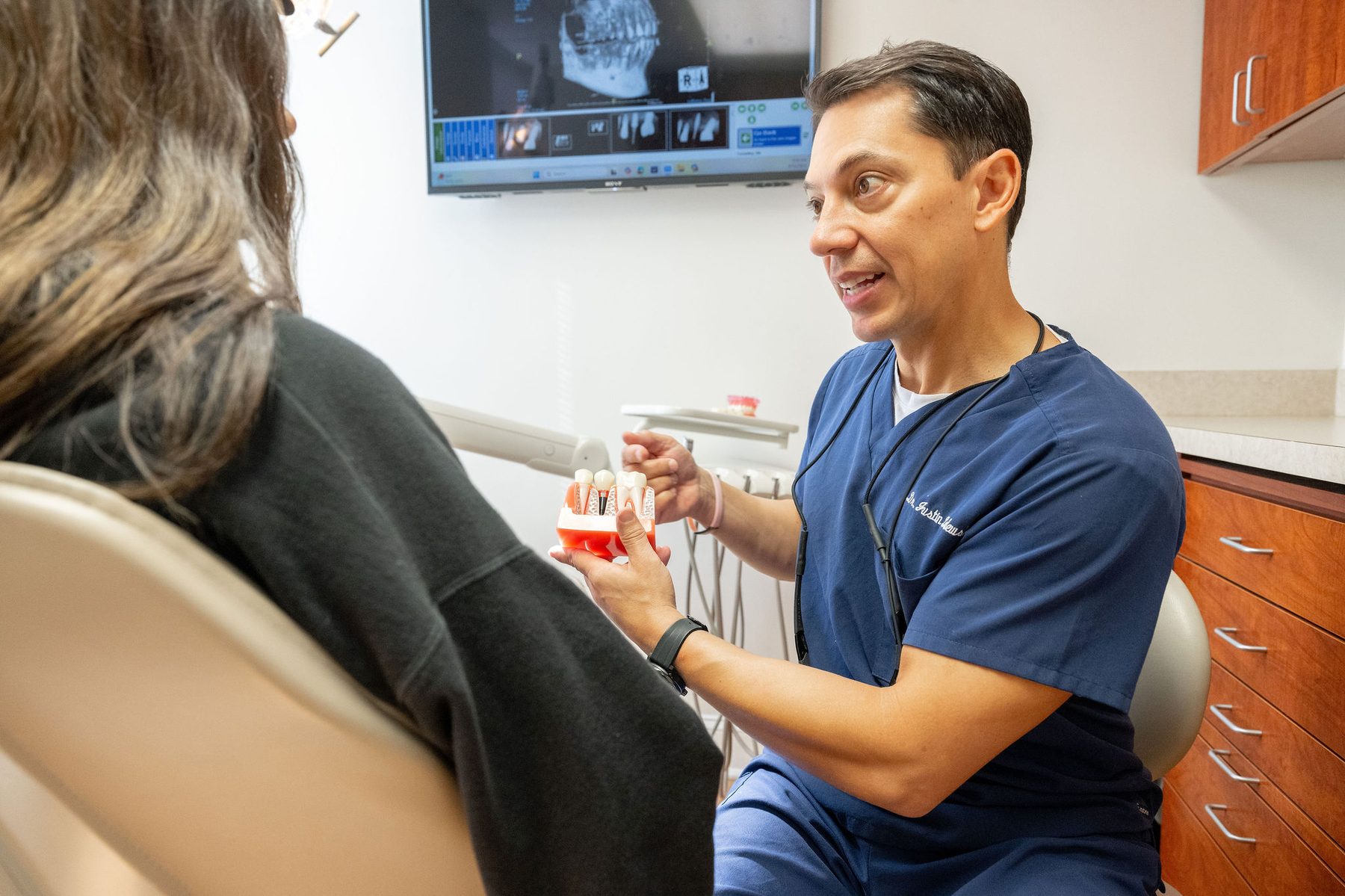
Periodontics
Identify why gums are receding, and treat the cause, not just the symptom.
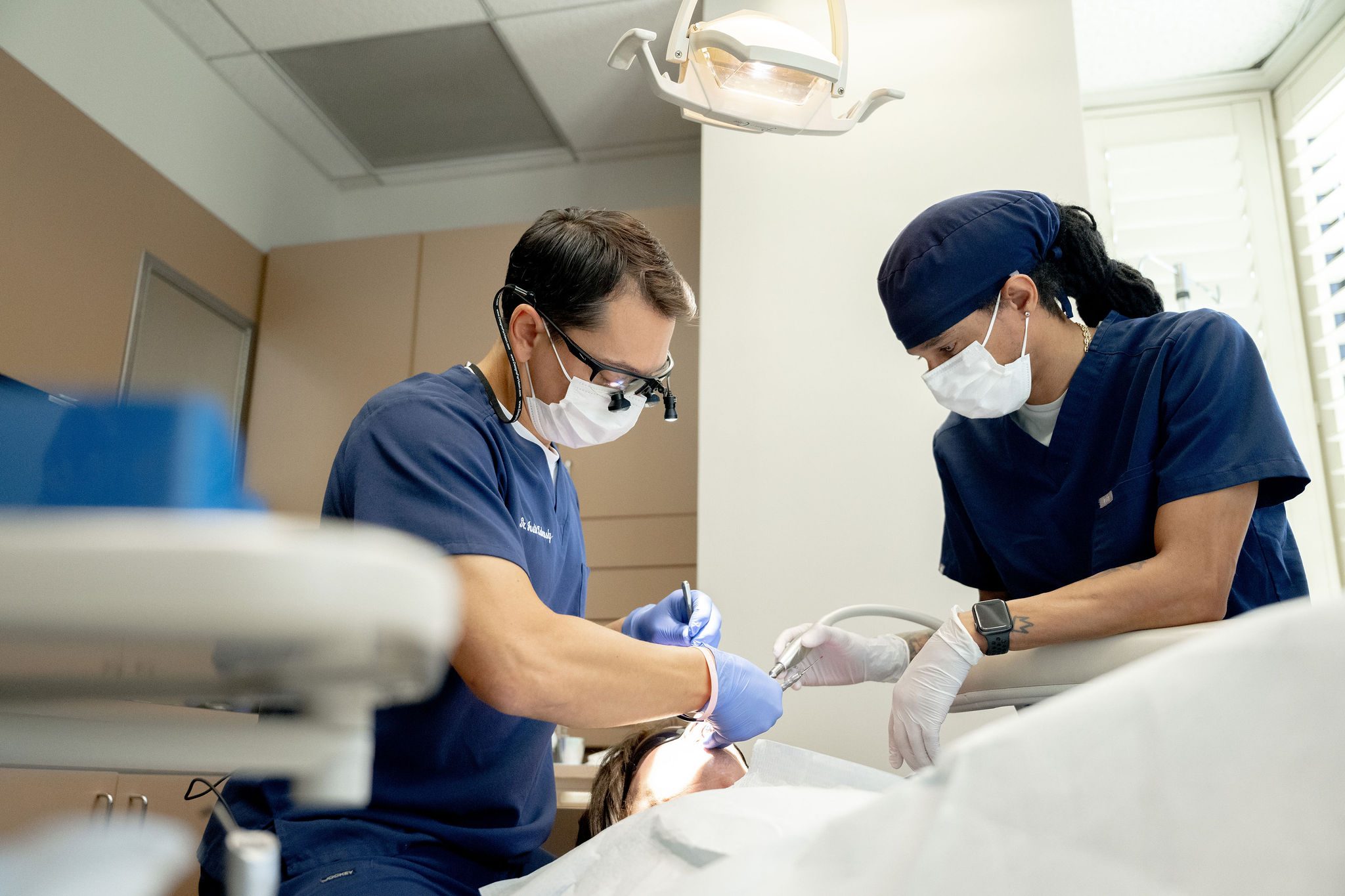
Periodontics
Gum recession occurs when the gum tissue surrounding the teeth begins to pull back or wear away. This exposes more of the tooth or tooth root. Along with affecting the appearance of your smile, gum recession can increase the risk of developing gum disease. This is why regular dental checkups are so important. Common signs of gum recession include longer-looking teeth, visible tooth roots, increased tooth sensitivity, bleeding, inflammation, and bad breath.
At Precision Periodontics and Implant Dentistry, our specialty-trained periodontists our specialty-trained periodontists have years of experience treating a wide range of stages of gum disease and placing dental implants. To learn more about treatment options for gum recession, our clinic facilities, or to schedule an appointment, contact our Alexandria, VA office at (703) 823-2422 or our Washington, D.C. office at (202) 296-3360.
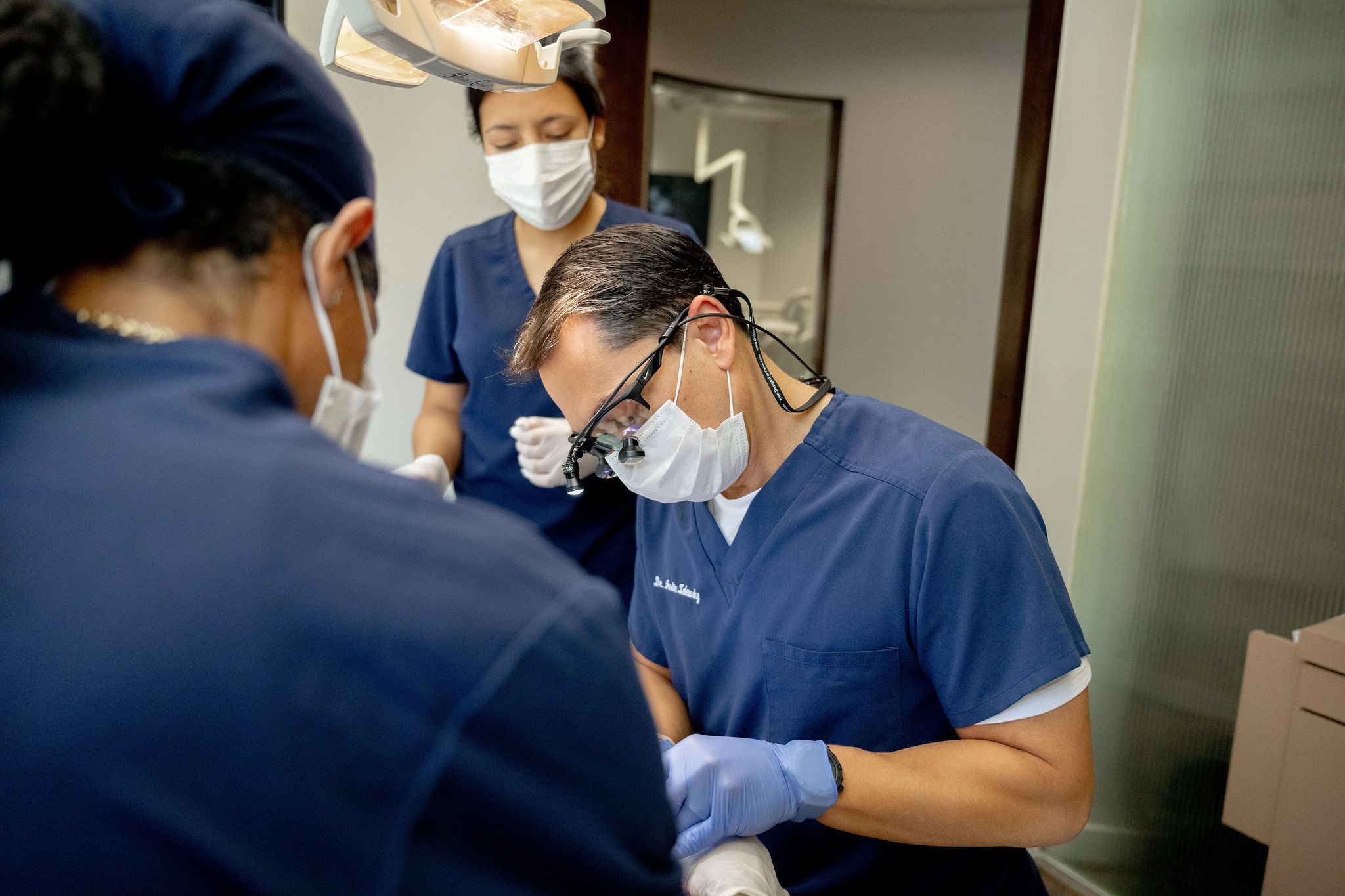
The Procedure
Here's what your gum recession treatment looks like, step by step.
To treat gum recession, it will be necessary to first diagnose what is causing your gums to recede. The following are the most common causes of gum recession:
Aggressive brushing: As important as it is to brush twice daily, it is equally important that you follow appropriate brushing techniques. Brushing with a hard-bristled toothbrush or brushing too aggressively can result in the erosion of tooth enamel, which can inflame or irritate gum tissue, resulting in gum recession.
Poor oral hygiene: If you do not practice consistent and proper oral self-care, plaque can begin to develop in and around your gums, resulting in gum disease, which can cause gum recession.
Periodontal disease: When gum pockets become deepened due to poor oral hygiene or other factors, periodontal disease can develop, which will cause the gums to continue to recede and can eventually result in the loss of teeth and/or deterioration of the jawbone.
Chewing tobacco: All forms of tobacco will have a negative effect on your oral and overall health, but chewing tobacco is the most likely form of tobacco to irritate the lining of your mouth and cause gums to recede.
Malocclusion: Patients who have an incorrect bite caused by uneven teeth alignment will experience excessive strain, tearing, and wear on their gums and teeth, which will inevitably result in gum recession.
The type of treatment you will receive will be informed by the underlying cause of your gum recession, along with your medical and oral health history. If your gum recession is due to aggressive brushing techniques, your periodontist may suggest using a softer toothbrush and/or instruct you in softer brushing techniques. If gum recession is the result of improper oral hygiene, it may be recommended that you have a deep cleaning performed and schedule periodontal maintenance on a more frequent basis. If the cause of gum recession is severe calculus, it may be necessary to have a scaling and root planing procedure, gum graft, or pinhole surgical technique, and/or gum regeneration to restore the cosmetic appearance of your gum line and prevent additional issues from developing in the future.
Recovery & Aftercare
Following your gum recession treatment, you will not have to follow any special aftercare instructions; however, to maximize the benefits of your procedure and avoid developing similar issues in the future, it is imperative that you practice good daily oral hygiene practices. Be sure to brush and floss twice daily and continue scheduling regular visits to your dentist or periodontist. These regular visits ensure that your teeth will receive regular professional cleanings and will reduce your risk of developing issues such as gingivitis or periodontitis. If you follow these best practices, you will enjoy a bright and healthy smile for many years to come!
Frequently Asked
Both procedures treat gum recession, but they take opposite approaches. Gum grafting harvests tissue from the roof of your mouth (or uses a donor allograft) and sutures it over the receded area, then relies on that transplanted tissue to blend and stabilize over several months. The Pinhole Surgical Technique is scalpel-free and suture-free: a small pinhole is made in the gum above the recession and specialized instruments gently loosen and reposition your existing gum tissue down over the exposed root, then collagen strips are tucked in to hold the new position. Recovery for Pinhole is generally faster and more comfortable, and multiple teeth can be treated in one visit. Grafting still has a role for cases where there isn't enough existing gum tissue to reposition or when the recession is severe. At your evaluation, we map your recession pattern and tissue quality to recommend the technique that will give the most predictable result.
Overly Aggressive Brushing & Receding Gums: There is such a thing as brushing your teeth too hard. If you scrub aggressively or floss hard, this can wear away at your gums, cause infection, or cause your gums to recede. Gum recession can also, and oftentimes is, caused by gum disease, which can lead to a black triangle. When gum tissue pulls away from the tooth, or recedes, it exposes more of the tooth’s root, creating a gap between the two teeth. Orthodontic Treatment: Braces, retainers, or other orthodontic treatments that are meant to move your teeth can sometimes leave gaps. If this is the case, you may require further treatment.
The cost to correct black triangles depends on which treatment is appropriate for your case. Composite bonding, the most common approach, typically runs $300 to $600 per tooth. Hyaluronic acid gum filler is a minimally invasive option at roughly $600 to $1,500 per treated area, though it usually needs to be refreshed every 6 to 12 months. When black triangles are caused by significant gum recession, a surgical option such as the Pinhole Surgical Technique or a connective tissue graft may be the right long-term fix, generally ranging from $1,200 to $3,000 per tooth. Orthodontic re-alignment is another option in some cases, at $3,000 to $9,000 for a full treatment. A consultation is the best way to identify the underlying cause and match it to the least invasive, most durable treatment for your smile.
Cost & Payment
The cost of treating gum recession will depend on a variety of factors, including your dental insurance plan, what type of procedure is performed, and what type of dental sedation (if any) is used.
At Precision Periodontics and Implant Dentistry, we are committed to ensuring that money is not a deterrent to our patients receiving the optimal dental health care they deserve. For this reason, we offer a range of payment options regardless of what type of treatment you are having, which our staff will be happy to explain and assist with. Dr. Zalewsky is an out-of-network provider for all insurance plans, and Dr. Hoge is a participating provider with Delta Dental Insurance. Our office insurance coordinators work with other insurance companies to assist patients with their claims.
For your convenience, Precision Periodontics and Implant Dentistry accepts cash, check, debit, and credit cards (Mastercard, American Express, Visa, and Discover). Our clinic also accepts GreenSky Patient Solutions, a financing option for procedures and treatments not typically covered by insurance or when insurance does not cover the entire cost. We are happy to provide an application in our office. You can find out more information about this service at https://www.greensky.com/patient-faq/.
For your convenience, we accept:
Where We Practice

Request An Appointment
Contact us with any questions or to schedule a consultation at our Washington DC, Alexandria, or Reston office. We look forward to welcoming you.