Tooth Socket Preservation Washington DC & Alexandria VA
If you are undergoing a tooth extraction, your dentist may also recommend that you undergo socket preservation.
After an extraction, an empty socket remains in the jawbone where the tooth was previously located. To limit bone loss and preserve the shape of the ridge, grafting material—typically derived from a human donor, an animal source, or a synthetic material—is placed into the socket. The graft may then be covered with a collagen membrane, and the area may be sutured to support healing.
Socket preservation helps maintain the structure of the jawbone and can provide a stronger foundation for the future placement of a dental implant.
At Precision Periodontics and Implant Dentistry, our specialty-trained periodontists Drs. Zalewsky, Daru, Gupta, and Lakkis have years of experience treating a wide range of stages of gum disease and placing dental implants. To learn more about socket preservation, our clinic facilities, or to schedule an appointment for a procedure, contact our Alexandria, VA office at (703) 823-2422 or our Washington, D.C. office at (202) 296-3360.
Contact Precision Today
Socket Preservation Expectations
Patients having a tooth extracted can have a range of procedural experiences. As long as the teeth have erupted and are visible, they can typically be removed through a simple extraction technique. If you are having a simple tooth extraction, the procedure will begin with the administration of a local anesthetic, which will numb the area of the tooth being removed. Although this will lessen the amount of pain experienced, patients will still feel a sense of pressure as the tooth is being removed.
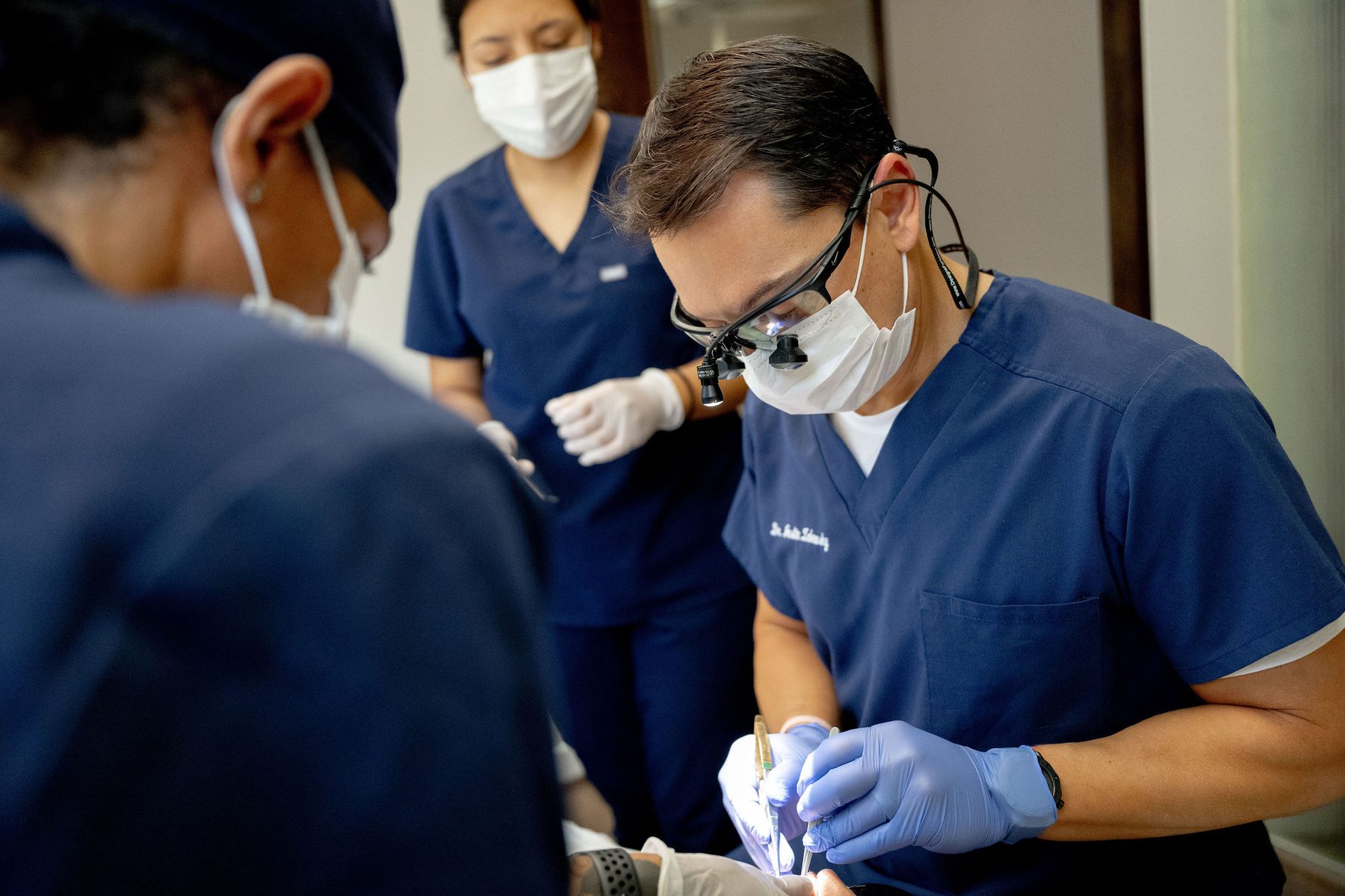
During the extraction process, your periodontist will use tools to elevate the tooth from its socket, along with forceps to grasp the tooth for removal. Gauze will typically be used to control bleeding while this process is occurring. For more invasive cases, it may be necessary to make surgical incisions in the gums or break the tooth into smaller pieces so it can be properly removed. Once the tooth has been removed, the graft will be placed in the socket of the tooth that has been removed to prevent the socket from naturally closing. Once the graft is properly placed, the area will be sutured shut, and the healing process can begin.
Socket Preservation Aftercare
To ensure that you minimize post-procedural risks and experience and have as smooth a recovery experience as possible, it is essential that you follow post-procedure instructions following your tooth extraction and socket preservation. Post-procedure care will vary from patient to patient and be informed by the type of dental extraction you have, but in general, it is important to avoid eating hard foods, refrain from smoking, and limit/avoid physical activity for at least the first two to three days, maybe longer, depending upon the severity of your extraction. Your periodontist may also recommend that you avoid brushing your teeth for the first day following the removal of your tooth.
Patients who have a tooth extraction and socket preservation typically experience mild bleeding following the procedure. To help manage bleeding, place fresh gauze over the socket where the tooth was extracted, replacing the gauze every 30-45 minutes or until the bleeding stops. Swelling following a tooth extraction procedure is also common and can generally be addressed through the use of ice packs and anti-inflammatory over-the-counter medication.
Once you have completed the healing process, it will not be necessary to follow additional aftercare instructions; however, in order to maximize the benefits of your procedure, it is imperative that you continue practicing good daily oral hygiene. Be sure to brush and floss twice daily and continue scheduling regular visits to your dentist or periodontist. These regular visits ensure that your teeth will receive regular professional cleanings and will also reduce your risk of developing underlying issues such as gingivitis or periodontitis. If you follow these best practices, you will enjoy a bright and healthy smile for many years to come!