
Periodontal Procedures
Gum Disease Treatment
in Bethesda
Gum Disease Treatment for Bethesda residents at Precision Periodontics & Implant Dentistry
Periodontal Procedures
Gum Disease Treatment in Bethesda
Bethesda is an affluent Montgomery County community just across the DC line, known for its thriving restaurant scene and the National Institutes of Health, and when it comes to gum disease treatment, the community trusts the team of periodontists at Precision Periodontics & Implant Dentistry in Washington DC. Gum disease treatment addresses gingivitis and periodontitis — bacterial infections of the gum tissue and supporting bone that, left untreated, can lead to tooth loosening and tooth loss.
The short 15-minute drive from Bethesda to our Washington DC office is well worth it for the level of specialized gum disease treatment care our periodontists deliver. Periodontal disease is the leading cause of tooth loss in adults and has been linked to systemic conditions including heart disease, diabetes complications, and adverse pregnancy outcomes. Early treatment is critical.
Why Precision Periodontics
Board-certified periodontists serving Bethesda.
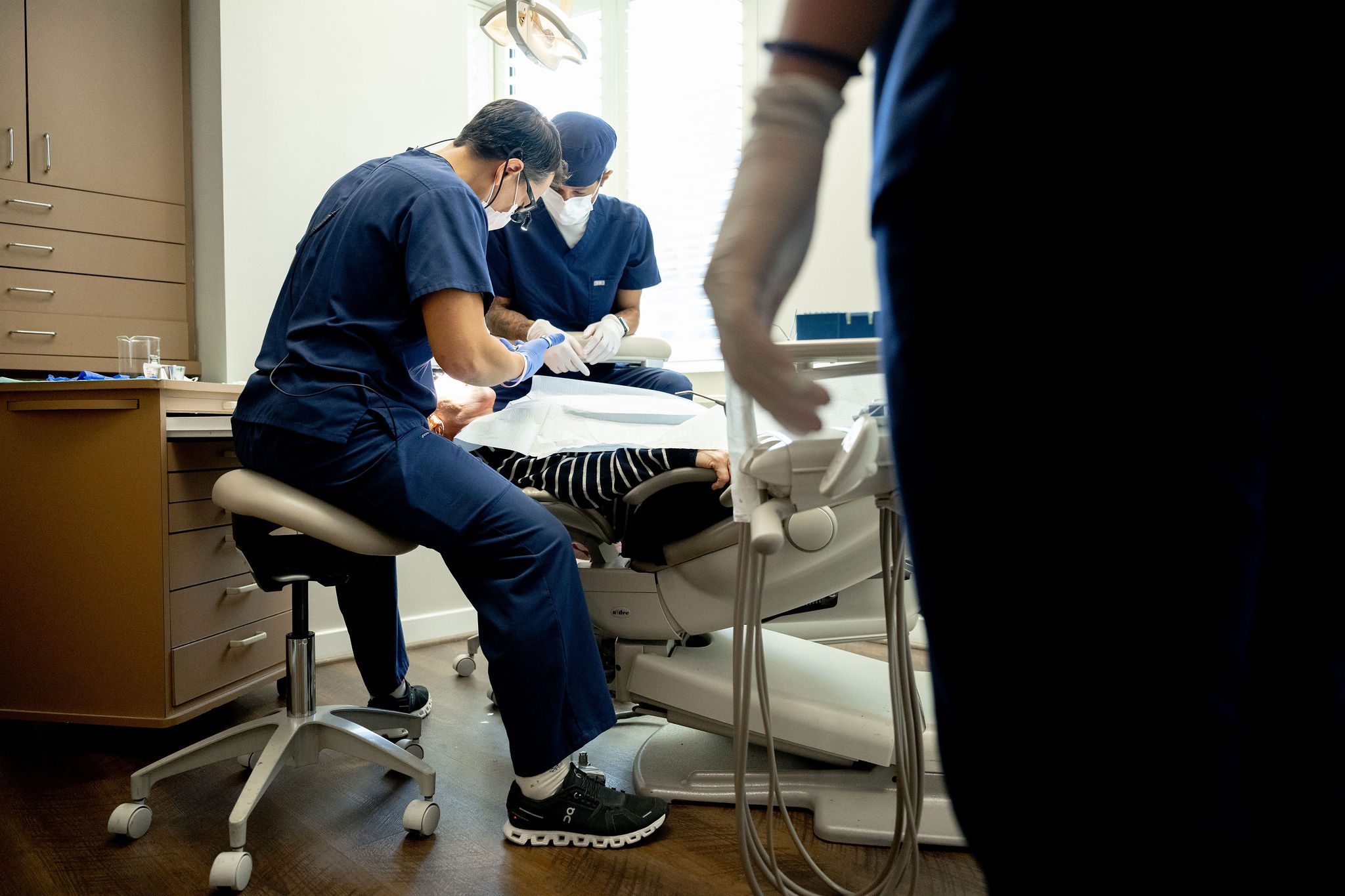
With a team of six board-certified periodontists trained at leading institutions, Precision Periodontics brings an exceptional level of skill to every gum disease treatment case. Our board-certified periodontists create individualized treatment plans that may include deep cleaning, LANAP laser therapy, antibiotic therapy, and surgical intervention depending on the severity of the disease. Bethesda patients benefit from our team's combined decades of specialized experience.
Your journey to improved periodontal health starts with a single call. Bethesda residents can reach our Washington DC office at (202) 296-3360 or request a consultation online. Our 15-minute proximity from Bethesda makes expert gum disease treatment care genuinely accessible.
Frequently Asked Questions
Gum Disease FAQ for Bethesda Patients
What are the early warning signs of gum disease?
Early gum disease (gingivitis) causes red, swollen gums that bleed when you brush or floss. You may also notice persistent bad breath, a bad taste in your mouth, or gums that appear puffy along the tooth line. These symptoms are often painless, which is why regular dental checkups are essential for early detection.
Can gum disease be reversed?
Gingivitis (early-stage gum disease) is fully reversible with professional cleaning and improved home care. However, once it progresses to periodontitis — where bone loss has occurred — the damage cannot be reversed, only managed. Treatment focuses on halting progression and maintaining the remaining bone and attachment levels.
Is gum disease linked to heart disease and diabetes?
Yes. Research has established strong associations between periodontal disease and cardiovascular disease, diabetes, respiratory infections, and adverse pregnancy outcomes. The chronic inflammation and bacteria from gum disease can enter the bloodstream and contribute to systemic inflammatory conditions.
How often should I see a periodontist if I have gum disease?
Patients with active or history of periodontitis should have periodontal maintenance visits every three to four months rather than the standard six-month dental cleanings. This more frequent schedule allows for early detection of disease recurrence and removal of bacterial biofilm before it can cause further damage.
Getting Here
Directions from Bethesda to Our Washington, DC Office
Our Washington, DC office is approximately 15 minutes from Bethesda, near landmarks such as National Institutes of Health, Walter Reed National Military Medical Center, and Bethesda Row.
Driving Directions: Take Wisconsin Avenue (Route 355) south through Friendship Heights into DC. Turn left on M Street NW and continue east to our office at 2311 M Street NW, Suite 500.
Washington, DC: 2311 M Street NW, Suite 500, Washington, DC 20037
(202) 296-3360Request An Appointment
Let us help you achieve a healthier, more confident smile.
Contact us with any questions or to schedule a gum disease treatment consultation at our Washington, DC office. We look forward to welcoming you.